Visitors arrive at Tarangire National Park wanting to see elephants gathered in serious numbers. Tarangire dry season elephant behavior delivers that scene, but the deeper reward is watching what those elephants actually do. From June to October, seasonal water disappears. Family groups gravitate toward the Tarangire River and Silale Swamp. This is the moment to watch a matriarch decide when to cross, a calf learn how to dig, and a bull test the edge of family space. These seven field notes will help you read the action without rushing it.
Seven Facts About Tarangire Dry Season Elephant Behavior
- The dry season runs from June to October. Tarangire has a strong rain pattern. The main dry window begins around June and lasts through October, with the most consistent wildlife concentrations often from July onward. By late September, water is scarcest and herds may be tightly packed around permanent sources. Because rainfall varies by year, this window can shift by a few weeks, but it remains the safari industry’s best time to visit Tarangire.
- The Tarangire River is the center of daily movement. Pans and seasonal streams vanish before the river does. Elephant families move toward the Tarangire River, though they do not arrive only to drink. They feed in riverine woodland, rest in shade, then approach the water when temperatures drop. Mixed family groups may merge while traveling, which explains why Tarangire elephant herds can look so large. The river is also where most vehicle traffic gathers, so patience matters.
- Elephants dig for water in the sandy riverbed. When the river stops flowing, water usually remains under the sand. Elephants dig shallow wells with their trunks and front feet, then sip from the holes. Seeing elephants digging for water is one of the most distinctive dry-season sights in the park. The wells stay useful after the elephants leave, giving smaller animals a chance to drink. If you see a herd working the same patch of sand, stay quiet and let the sequence play out.
- Matriarchs lead the decisions around water. Family groups are social units led by the oldest female. A matriarch remembers where water lasts, when predators may be nearby, and which crossing feels safe. You can often predict a herd’s next move by watching the older female at the front. If she pauses, raises her trunk, or changes direction, the rest of the herd follows. Respect those pauses instead of treating them as photo moments.
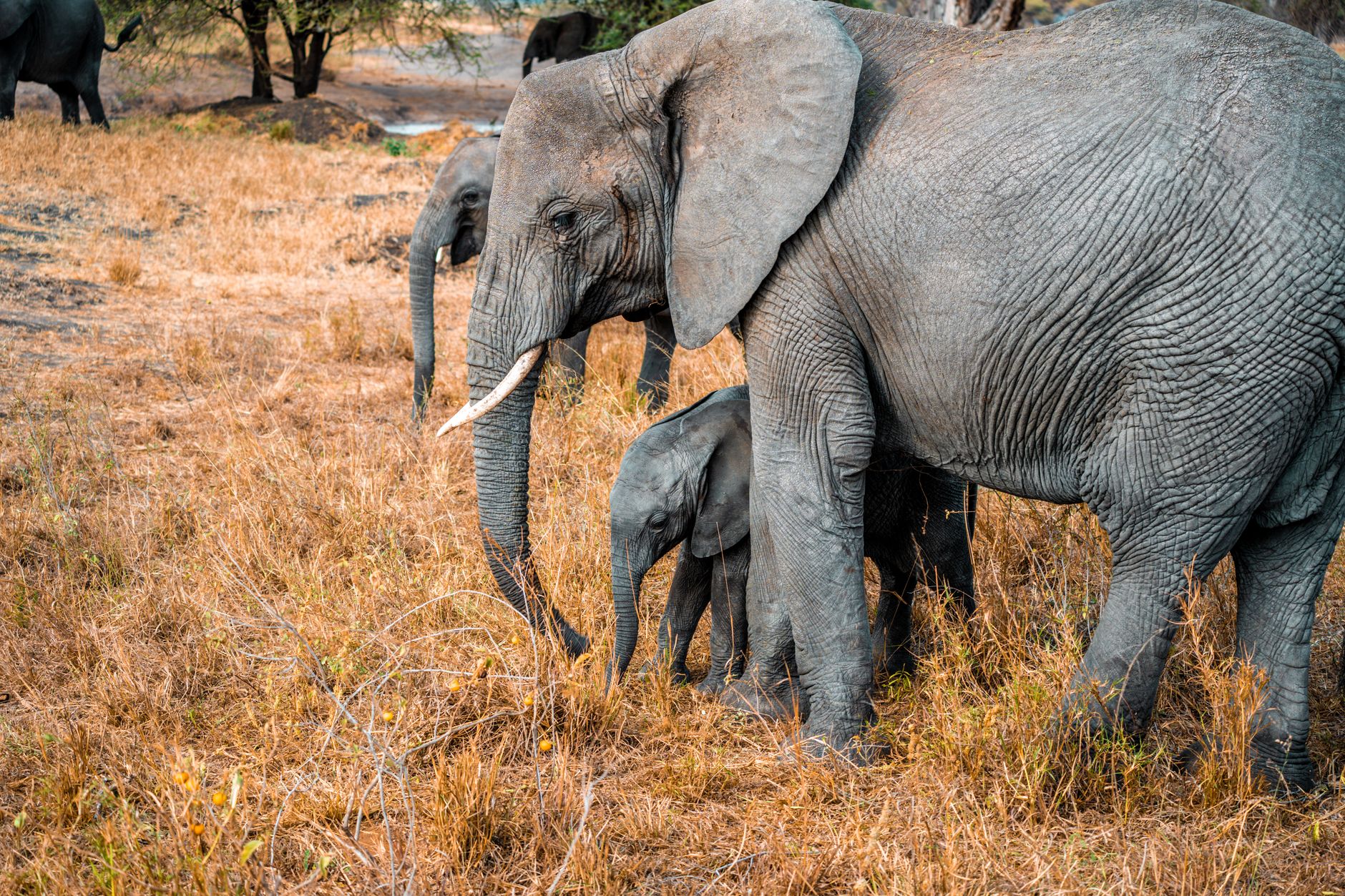
- Calves learn by watching and repeating. The dry season offers front-row seats to elephant education. Calves copy adults as they test water, push sand, and lift their trunks. A young elephant may kneel, fumble, or forget to seal its trunk before it succeeds. These attempts are not accidents. They are how a calf builds the skills it needs for next year’s dry months. Watching a mother tolerate that practice tells you a lot about herd patience.
- Bulls often move alone or in small bachelor groups. During the dry season, mature males are not always with family herds. They may feed by themselves and appear at water only when they need to drink. When bulls do join the river scene, they respect family space but can be assertive near drinking holes. A steady stare, ear flare, or a slow turn toward you means the bull is asking for room. Give it.
- Silale Swamp and riverine woodland add second acts. Do not spend every dry-season hour at the main riverbank. Silale Swamp can hold water later into the season and may be a quieter alternative when the river banks are busy. The woodland is another key habitat: elephants use it for feeding and shade during the hot middle hours. Ask your guide to include a slow loop near the swamp and then return to the river in the late afternoon.
How Does Dry Season Behavior Compare With the Wet Season?
Elephant distribution changes completely with the rains. Between November and May, temporary water and fresh grass allow Tarangire’s elephants to spread across the wider ecosystem, including community land outside the park boundary. The park still holds elephants, but herds are smaller, less predictable, and more likely to feed in thick woodland. That makes the dry season the easier window for watching water-driven behavior. It also explains why wildlife managers think in landscapes, not park borders.
What Does Responsible Viewing Look Like Around Water?
Give dry-season elephants enough room to reach water without detouring. Keep the vehicle quiet, stay on tracks, and never block the path between a herd and the river. If an elephant shakes its head, spreads its ears, lifts its trunk, or stops suddenly, that is a signal. Reverse slowly or wait until the herd moves. A skilled guide reads these cues long before a charge becomes necessary.
How to Plan an East African Safari Around These Behaviors
Reading elephant behavior matters only if your overall itinerary makes sense. First, compare the practical costs. Kenya and Tanzania safari park fees help you budget before you choose a country. If northern Tanzania is your destination, pair Tarangire with a visit near Ngorongoro; Ngorongoro Rim versus Crater shows how different the two experiences can be. Travelers weighing Kenya as well can compare Masai Mara versus Amboseli for families, because Amboseli offers its own year-round elephant spectacle around the swamps.
Your Next Step: Compare Operators Who Wait
Your next step is to find a safari company that treats the river as a classroom, not a checklist. Compare operators on platforms such as FindMySafari, Valley Safaris, or Trunktrails Safaris. Ask how much time your day plan gives to the Tarangire River and whether the guide explains what the elephants are doing before moving on. That question will tell you which operator will help you understand Tarangire’s dry season, not just photograph it.
More safari planning resources
- Best time to visit Kenya map from SafariPure
- Best time to visit Kenya from Trunktrails Safaris
- Best time to visit Kenya month-by-month map from Valley Safaris
- Big Five safari collection on FindMySafari